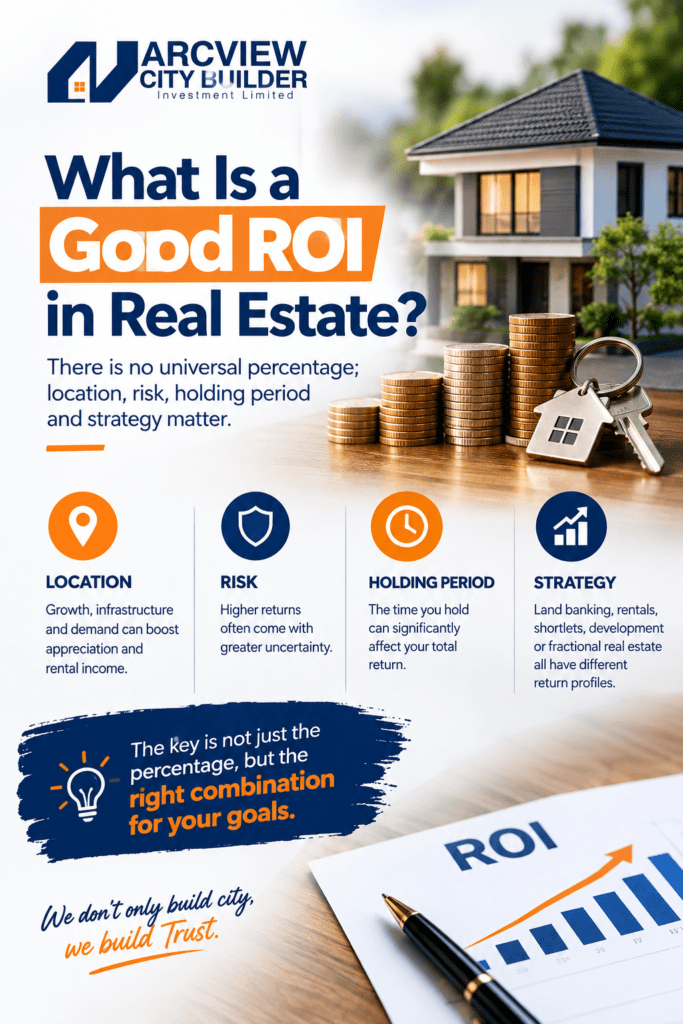
What if someone tells you that a 20% ROI is always a good real estate investment? Don’t rush to agree. In real estate, there is no universal percentage that automatically makes an investment good or bad.InterestA good Return on Investment (ROI) depends on several factors.
Location matters because properties in areas experiencing population growth, infrastructure development and rising demand may have stronger appreciation potential. Risk also matters—a higher expected return may come with higher uncertainty.
Your holding period is another important factor. A property held for five or ten years may produce a different overall return from one bought and resold within a year. Your investment strategy matters too. Land banking, rental property, shortlet apartments, development and fractional real estate can all have different return profiles.
Instead of asking, “What percentage ROI should I expect?” ask, “What return is realistic for this particular property, given its location, cost, risks, strategy and timeframe?”Also consider expenses, taxes, maintenance, financing costs and other fees when calculating your actual return.
Before investing, look beyond the advertised ROI. Conduct proper due diligence, understand the numbers and assess the factors that can influence your investment.Remember: a smart real estate decision is not simply about chasing the highest percentage—it is about understanding the risk, timeline and potential return together.